Atlanta often discusses legacy. This week marked real progress toward making it tangible.
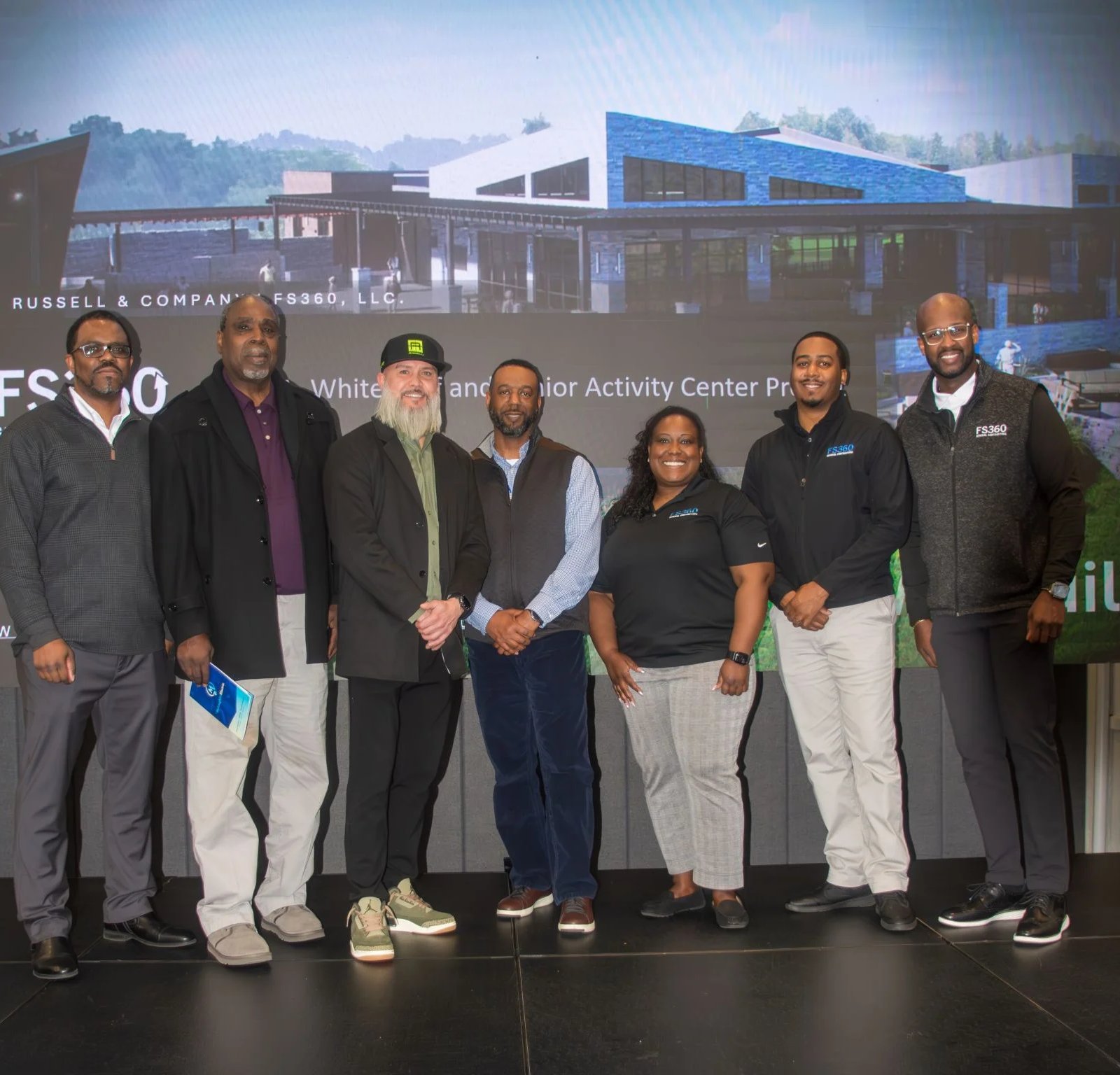
For the first time, two Black-owned general contractors are serving as the prime team on a public-sector project in Atlanta. H.J. Russell & Company and FS 360 were selected by the Atlanta Fulton County Recreation Authority to lead the $25 million redevelopment of the John A. White Golf Course and Senior Activity Center in Southwest Atlanta.
This moment reflects years of policy, preparation, and persistence finally coming together in a meaningful way.
From Policy to Leadership in Atlanta Construction
Atlanta's construction industry did not change overnight — it changed because of policy. In the 1970s, former mayor Maynard Jackson introduced minority participation requirements for city contracts, despite early resistance and doubts about the capacity of minority-owned firms. Over time, Atlanta proved those doubts were unfounded.
Those policies not only opened doors but also helped build firms like H.J. Russell & Company, which became one of the nation's largest minority-owned construction firms and played a significant role in shaping Atlanta's skyline.
Why This Joint Venture Matters
The John A. White project marks a historic milestone not just because of who was selected, but how the work is structured. The joint venture places both firms in shared prime leadership — with equal decision-making authority, accountability, and responsibility for delivery at the highest level of a public investment.
Michael B. Russell Sr., CEO of H.J. Russell & Company, and Ernest L. Ellis, founder and CEO of FS 360, demonstrate what is possible when opportunity and preparation align across generations of Black-owned businesses.
The Role NAMC Played
While the project award reflects the strength and leadership of the joint venture team, organizations like the National Association of Minority Contractors of Greater Atlanta play an important role in what follows. NAMC has spent years supporting minority-owned firms through advocacy, technical assistance, and guidance on competing for and managing complex public contracts.
For the John A. White project, NAMC worked with Russell and FS 360 to help connect local subcontractors and suppliers to upcoming opportunities — ensuring qualified local firms were aware of the project and positioned to participate. Large public projects move quickly, and without clear pathways to information and access, many capable firms can be left out not because of a lack of skill, but because of limited visibility.
A Project Grounded in Community
The John A. White Golf Course has been a valuable part of the community since 1929, hosting youth programs and fostering community ties through sports and mentorship. The redevelopment will introduce new amenities designed to serve residents across generations: Atlanta's first dedicated senior activity center, wellness and fitness spaces, a modernized golf center and restaurant, conference and community meeting spaces, and enhanced facilities for youth programs.
Why This Moment Extends Beyond One Project
The John A. White project is an example of what meaningful inclusion looks like in practice. It is not symbolic participation. It is not subcontracting at the margins. It is shared leadership on a major public investment — and it signals to minority-owned firms across Atlanta that large-scale opportunity is possible when systems are structured to support real growth.
This is more than a win for two companies. It reflects a genuine shift in Atlanta's public-sector contracting — from participation to partnership, and from access to ownership. The foundation was laid decades ago by Mayor Jackson. What H.J. Russell and FS 360 are doing now is proof that when the door stays open long enough, institutions are built that can walk through it and lead. Atlanta set a new standard with this one.