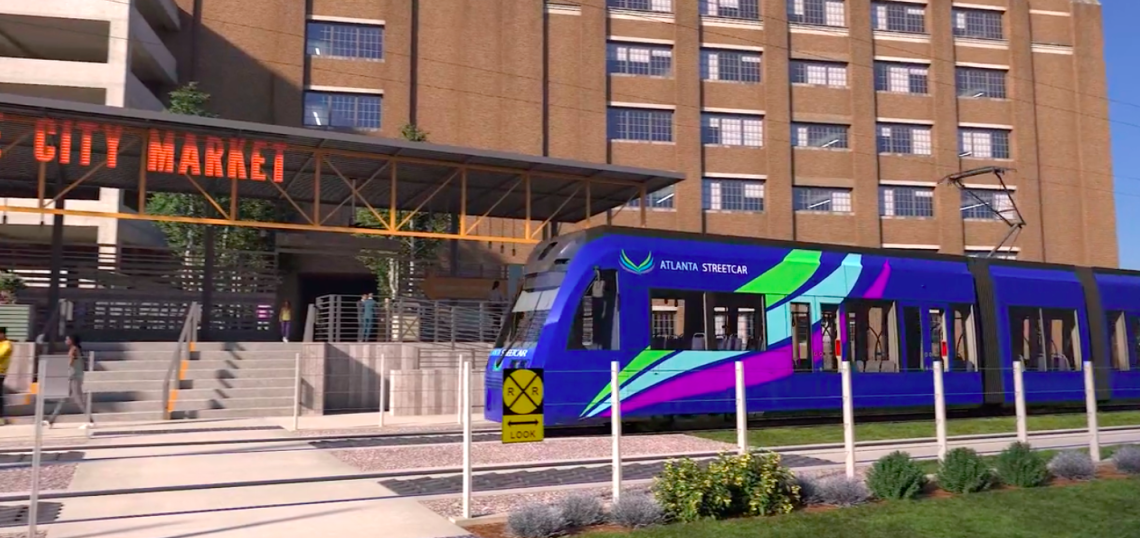
I've been covering the Atlanta BeltLine long enough to know that every transit announcement comes with a side of skepticism. This week's news is no exception. Atlanta BeltLine Inc. just dropped a blog post titled "BeltLine Transit: What's Up and What's Next?" And honestly? It reads like a promise to eventually make a promise. They're talking big about a "world-class, multi-modal transit network" — but the actual light rail that people have been waiting decades for? Yeah, that's been pushed to the back burner. Again.
The Autonomous Shuttle Pilot Is Moving Forward
Here's what's actually happening: The BeltLine is launching a year-long autonomous shuttle pilot program called ATL Spoke, set to begin in May 2026. The service will connect the Southwest Trail at the Lee + White district, MARTA's West End station, and the Atlanta University Center. The route is two miles, the shuttles are free, and they'll run every 10 to 15 minutes, seven days a week. The AUC branch won't start until late Q3 2026 — timed for students returning in the fall. Funding comes from a $1.75 million Atlanta-Region Transit Link Authority grant. The vehicles are Karsan Autonomous e-JEST models, recently unveiled at the Florida Autonomous Vehicle Summit in Orlando. The goal? To test whether driverless transit could actually scale in Atlanta.
To lead the effort, the BeltLine created a new role — vice president of transit innovation — and hired Joe Lacobucci, who most recently led the New Mobility Practice at global transportation firm TYLin and previously held senior roles at the Chicago Transit Authority, including delivering Chicago's first Bus Rapid Transit service, over a career spanning more than 20 years.
What Happened to the Eastside Streetcar?
Good question. Last year, a backroom decision by the Program Governance Committee quietly paused More MARTA funding for two streetcar feasibility studies. That effectively killed momentum for light rail on the Eastside Trail — the most popular section of the BeltLine. An AJC investigation found that some city officials, longtime BeltLine advocates, and even Eastside residents had no idea the decision had been made. BeltLine officials now say the move was legit under a 2020 agreement with MARTA, but they admit the transparency wasn't great.
Now, the city is reprioritizing light rail construction to start on the Southside corridor instead of the Eastside. No timelines have been announced. Translation: Don't hold your breath.
How Is the BeltLine Funded?
People ask me this all the time. The BeltLine has four main funding sources. The biggest by far is the Beltline Tax Allocation District (TAD), which accounts for roughly 75% of the FY2026 budget. The rest comes from the Special Service District, federal and state grants, and philanthropic contributions from foundations, corporations, and individual donors. That funding model works great for trails and parks. But transit? That's a whole different beast. Light rail is expensive, politically complicated, and requires long-term coordination between the city, MARTA, and state agencies. And right now, it doesn't seem like anyone's in a rush.
I want to believe the BeltLine's commitment to transit is real. But after years of delays, funding pivots, and vague timelines, I'm skeptical. The autonomous shuttle pilot is interesting—don't get me wrong—but it feels like a consolation prize. Atlantans were promised a 22-mile loop with light rail connecting 45 neighborhoods. What we're getting instead is a two-mile driverless shuttle and a lot of "eventually." The BeltLine has been transformative for Atlanta. But without real transit, it's just a very expensive sidewalk. And let's be honest: if you've ever tried to get from West End to the Eastside Trail on a Saturday afternoon, you know we need more than a shuttle.


