Buy the home. Lease the land.
That is the basic community land trust arrangement being offered at Brawley Commons, a 10-home project taking shape where James P. Brawley Drive meets Proctor Street in English Avenue. It can lower the price of getting into a home. It also changes what an owner can earn when they sell.
For a prospective buyer, both sides of that deal matter. At Brawley Commons, the homes are becoming visible before the numbers are.
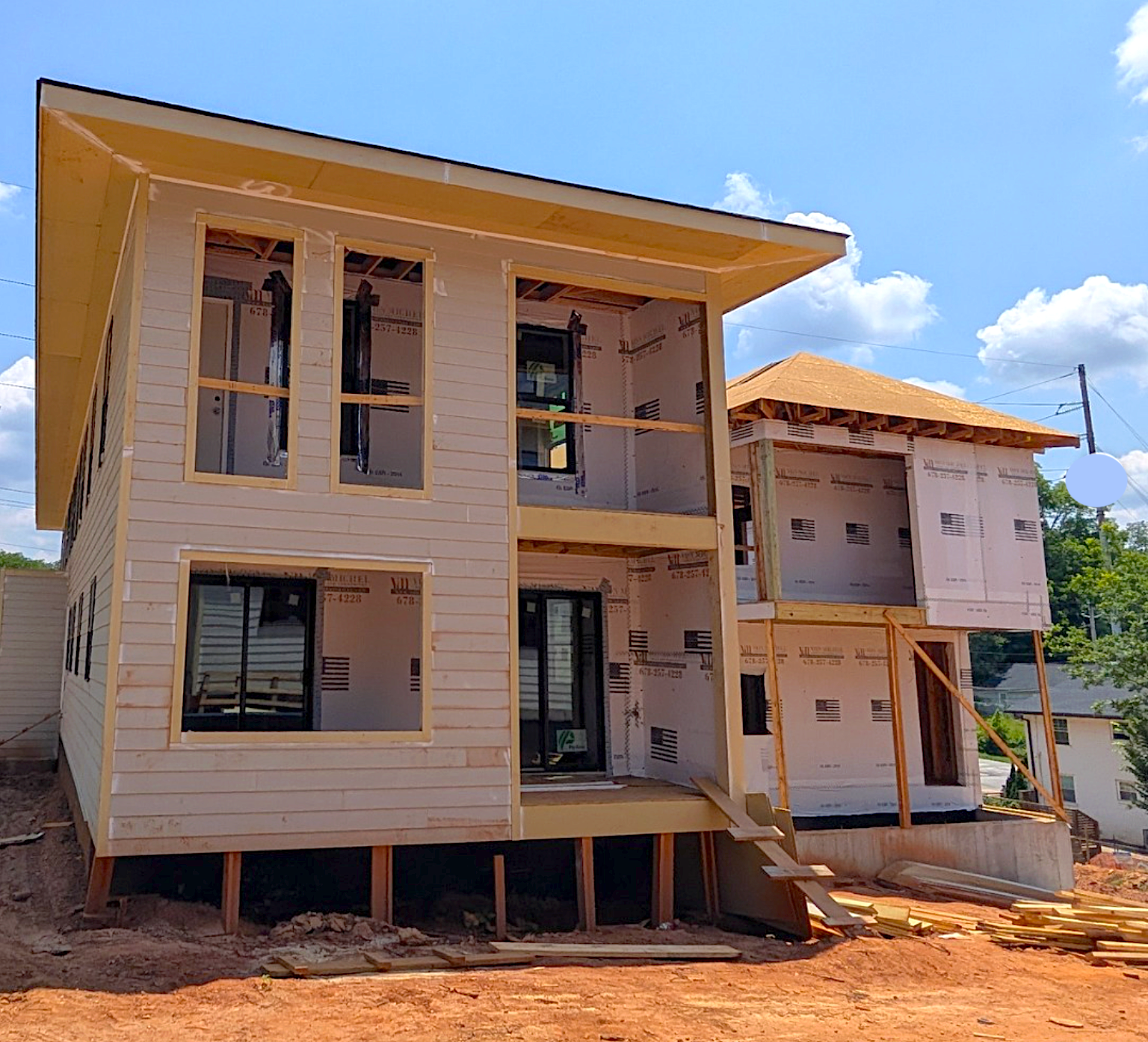
Westside Future Fund says construction began early this year on five duplexes containing 10 for-sale homes. In its June update, the organization said several homes had been framed. Four of the 10 homes, it said, will be sold through the Atlanta Land Trust.
That is four homes, not four duplexes. The distinction matters because four duplexes would mean eight homes under land trust terms. Another published account used the larger description, and the organizations have not publicly reconciled the difference. For now, Westside Future Fund’s statement is the clearest project-specific count.
Why these ten front doors matter
Many recent English Avenue housing announcements have focused on apartments. Brawley Commons adds homes a household can buy.
Ownership does not mean every one of these homes comes with the same deal. Westside Future Fund identifies four for the land trust. It has not published the sale prices, buyer qualifications or ownership terms for the other six. We should not assume those homes are market-rate or subject to the same restrictions.
That makes Brawley Commons a different story from nearby Proctor + Paines, which we reported is still in planning and preconstruction. At Brawley and Proctor, the buildings are going up now. What a buyer still needs is the paperwork behind the front door.
What “buy the home, lease the land” means
Under Atlanta Land Trust’s model, the trust retains ownership of the land. The buyer owns the home and leases the ground beneath it. Removing the land from the purchase can make the initial price lower than a comparable conventional home.
The agreement also limits the resale price so the next buyer has a chance to afford it. An owner can build equity, but cannot assume they will collect every dollar of a future increase in market value.
Atlanta Land Trust says it uses two resale formulas. Under one, the owner receives 25 percent of the increase in the home’s value. Under the other, the owner’s share is tied to average income growth. Those formulas can produce different outcomes. The trust has not publicly identified which would apply at Brawley Commons.
Here is a simple illustration, not a projection for this property: if a home’s value increased by $40,000, a 25-percent share of that appreciation would be $10,000. It would not mean the seller receives only 25 percent of the entire home’s value. The actual proceeds would also depend on the purchase price, mortgage balance, transaction costs and the terms in that buyer’s agreement.
That is why the resale formula belongs beside the asking price, not buried at the end of the conversation.
The number buyers still need
No Brawley Commons sale price has been announced. Atlanta Land Trust’s general guidance says it sets target prices around income qualifications and aims for a buyer’s final price not to create an unaffordable housing burden. That does not tell us the price, income band or monthly payment for any home on this corner.
A buyer will need to compare more than the mortgage. Ask for the ground lease payment, property-tax estimate, insurance, any association fees and the exact resale formula for the specific home. Ask whether down-payment assistance is available and whether it changes the amount due at resale.
Property taxes deserve a separate question. Atlanta Land Trust says its homes are currently taxed at the same rate as other properties and that it is seeking a way for assessments to better reflect resale restrictions. That statement does not tell a buyer what a Brawley Commons tax bill will be. Ask for the estimate in writing.
As construction advances, the checkable next steps are a published price for each home, eligibility requirements, confirmation of which four homes are in the land trust, and the documents explaining the ground lease and resale terms. Until those appear, nobody can responsibly tell a family what buying at Brawley Commons would cost.
I like that this project creates a path to ownership in Atlanta's west side. The land trust model can give a household a lower starting price while keeping a home within reach for the next buyer. That is a real benefit, especially in a neighborhood where rising property values can shut people out. But “affordable homeownership” has to be legible to the person taking on the mortgage. Tell buyers which four doors carry the land trust terms. Publish the prices and income qualifications. Show the expected monthly costs and an example of what a sale after several years might mean under the actual formula. A lower price at closing is only half the story. A family deserves to understand what it owns, what it owes and what it can take with it when it leaves.


